Pedcor Companies · 2020
Pedcor Companies
Project Description
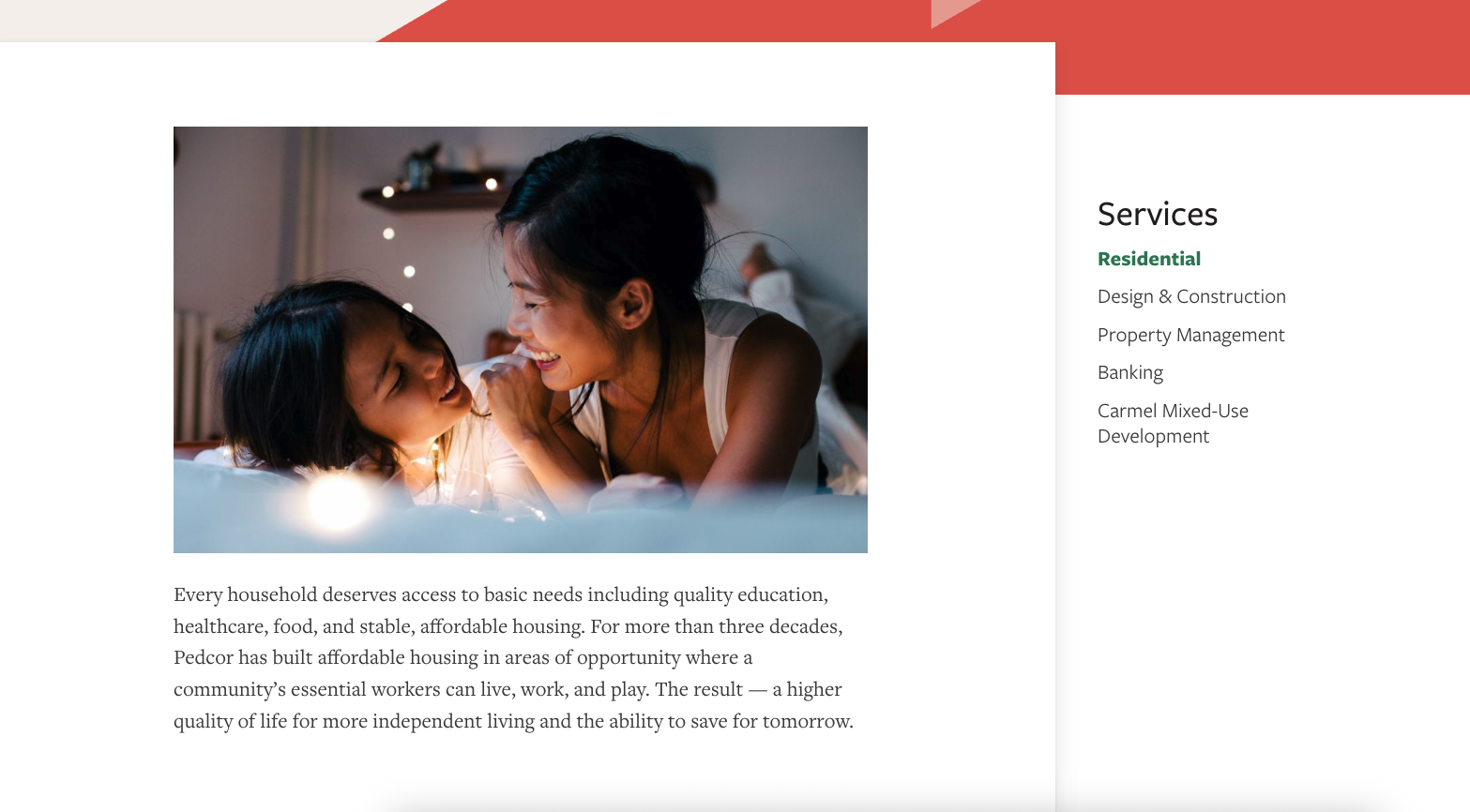
Pedcor Companies came to us during the period not too long after Gutenberg launched, when WordPress's new block editor was still very much in its early days. As the front-end developer on the build, I had to translate static designs into a system of templates and blocks that worked inside a dynamic editor. It had to be flexible enough that content authors could rearrange, swap, and recompose pages without breaking the design.
Empowering non-developers
The piece of work I'm most proud of had less to do with the markup and more to do with what it enabled. The company had historically relied on developers to make all edits to a site, even with it being WordPress. Pedcor's content was still in active development during the build — copy was changing, sections were being added, the structure of pages was shifting under us. Rather than route every content change through me, I trained Pedcor's designer and copywriter to work directly in Gutenberg: how the editor was set up, which blocks did what, where the constraints were, where they had room to move. Once they had the system, they could ship content changes themselves.
Translating designs into flexible blocks
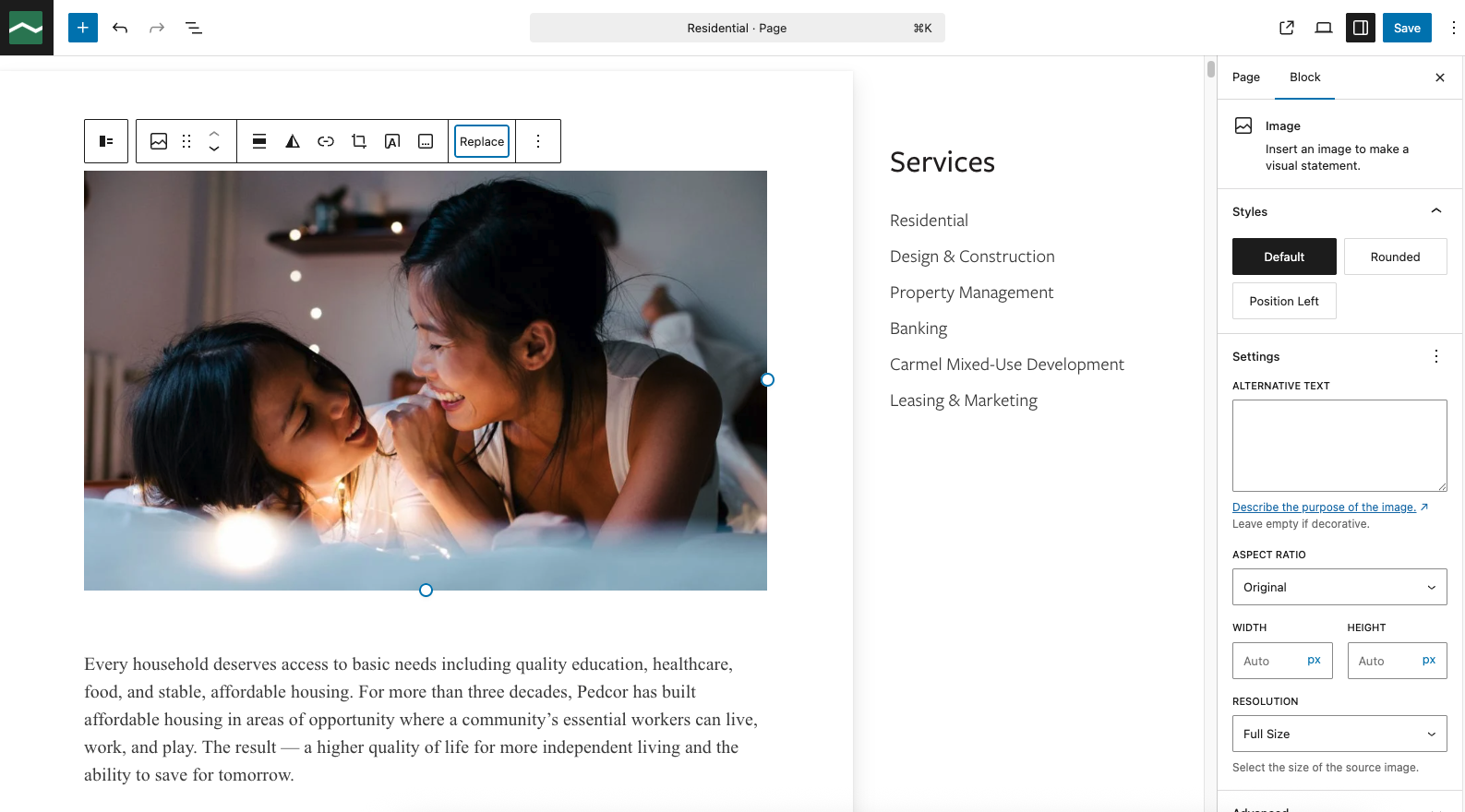
The hardest piece was the translation step itself. Static designs are more forgiving as they show one arrangement of one set of content. A design that has to survive a content team rearranging it requires thinking through every variant ahead of time, such as what happens when this column has more text, when that block sits next to a different one, when the heading is missing. I worked through those edges block by block until the system held under the editor's flexibility.

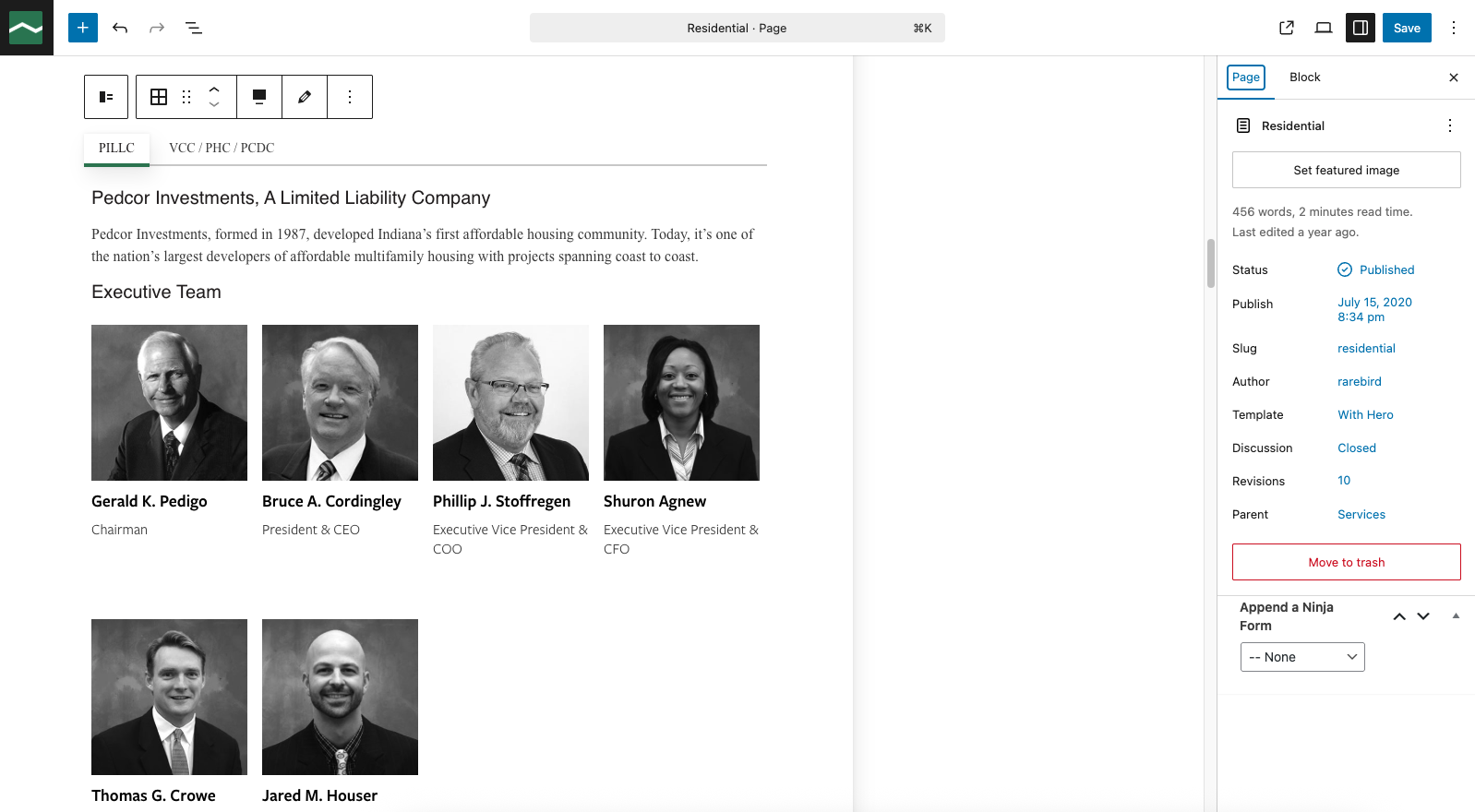
This was one of the first projects where I designed the workflow with non-technical team members in mind from the start. This was part of the new direction our company took to approaching custom WordPress work that I helped lead and cultivate.